
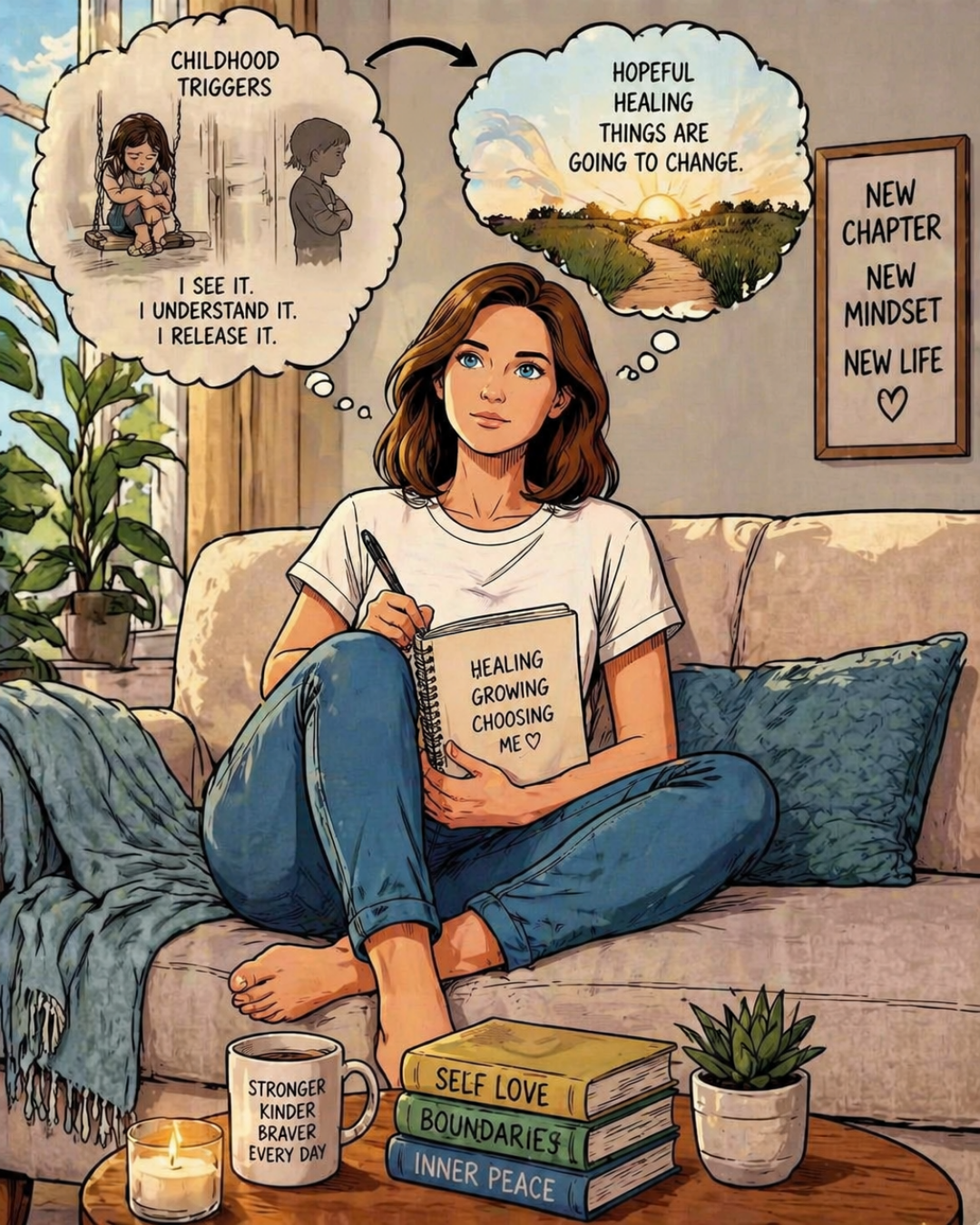
Why Your Triggers Keep Returning Even After Years of Healing
Many women believe that once they understand where a trigger came from, it should disappear.
- They know the story.
- They’ve journalled.
- They’ve cried.
- They’ve done the courses.
- They’ve had the insights.
Yet the next time someone criticises them, pulls away, ignores them, or raises their voice, the same emotional reaction returns.
It can feel confusing. You start wondering why you’ve done so much healing and still respond the same way.
The problem isn’t that you haven’t healed. It’s that understanding your past is not the same as changing the relationship you have with it.
The Emotion Is The Message
A trigger is not a sign that something is wrong with you. It is a sign that something inside you is asking for attention. The reaction you feel is often the younger part of you trying to protect you from discomfort that once felt overwhelming.
You may notice your chest tighten, your thoughts speed up, or your energy drop. These reactions are not about the present moment. They are reminders of a time when you did not feel safe, supported, or understood.
The emotion is the message that something inside you still needs reassurance.
How You Were Taught To Relate To People Or Get Approval
Many women learn early that staying connected requires staying agreeable.
Approval may have arrived when you were quiet, helpful, responsible, or easy to manage.
Disapproval may have arrived when you expressed needs, emotions, or boundaries.
You learned to adapt. You learned to anticipate. You learned to stay small to stay safe.
These early experiences shaped how you related to people. They taught you that belonging depended on behaviour, not authenticity. As an adult, your system can still respond as though those rules are in place.
Your trigger is not about the present. It is about the way you learned to survive the past.
The Truth Is The Mismatch
You may say you want healthy connection, yet your system is organised around avoiding emotional danger. You want honesty, yet your younger self wants protection. You want to speak up, yet your younger self remembers when that didn’t feel safe.
This creates a mismatch.
Your adult self is ready for growth. Your younger self is still protecting you from what once felt unbearable.
The mismatch is not a flaw. It is a sign that your desire for authenticity is meeting an old strategy that once kept you safe.
The Problems You Protect Yourself From
Your trigger protects you from experiences that once felt overwhelming:
- Being criticised.
- Being misunderstood.
- Being rejected.
- Being left alone.
- Being blamed.
- Being emotionally exposed.
Your system reacts quickly to prevent these outcomes. It is not trying to sabotage your relationships. It is trying to keep you safe from emotional discomfort that once felt too big to carry.
The cost is subtle.
- You may stay quiet when you wanted to speak.
- You may say yes when you wanted to say no.
- You may overthink conversations or second‑guess decisions.
Not because you are weak, but because your energy is still organised around avoiding what once hurt you.
The Question Creates The Choice
Triggers invite reflection. Ask yourself:
“What is this reaction trying to protect?”
“What did my younger self learn to fear in moments like this?”
“What would support look like for the woman I am today?”
“What choice becomes available when I am no longer protecting yesterday?”
These questions shift you from reaction into clarity. They help your system recognise that you are no longer living in the environment where your younger self learned those rules.
Final Reflection
Inner child healing is not about removing the younger part of you. It is about changing her role so she no longer carries responsibilities that belong to the adult you have become. When she no longer has to protect yesterday, your energy becomes available for the life you are creating today.
Ways We Can Work Together
If you’re ready to stop wondering what’s been getting in your way and understand the pattern that’s been shaping your life, I’d love to support you.
Choose the path that feels right for you.
Start with the 5-Minute Insight to discover the hidden influence that has been quietly directing your choices and draining your energy.
Or experience a Clarity Hour, where we’ll uncover the pattern beneath your situation, reconnect you with what matters most, and give you clear, personalised direction for what comes next.
You don’t need more years of searching. You need the clarity to see what has been there all along.
Soul clarity. Real direction.
Sincerely Claire