
The Hidden Ways Shame Exhausts You (And How to Change It)
A warm, straight‑talking conversation about the feeling most of us would rather pretend we never met.
Shame has a way of arriving before you have even made sense of what happened. One moment you are doing your best, and the next you are wondering how you are being seen. It is fast, dramatic, and surprisingly persuasive.
Let’s talk about it in a way that feels human, modern, and grounded, because shame already takes itself seriously enough.
What Shame Really Is
Shame is that moment when you feel exposed and want to pull back before anyone sees too much. It can make a small mistake feel much larger than it really is, as though one moment could change how people see you.
It whispers things like:
- “They’re going to think less of me.”
- “They’re going to see me differently now.”
- “I should have known better.”
Shame is more than a feeling. It puts you under a spotlight you never asked for, while everyone else seems to be deciding what they think.
The Shame Contradiction
Shame can pull your heart, your head, and your body into one tense inner conversation.
You may want connection and still feel the urge to disappear before anyone forms an opinion. You may want acceptance and still find yourself performing instead of relaxing.
Shame asks you to trade authenticity for approval, and that trade becomes exhausting very quickly.
How Shame Exhausts You
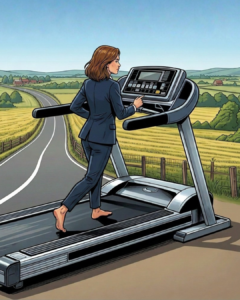
Shame does not only hurt. It adds labour.
You stop living your life and start watching yourself live it. You may find yourself:
- replaying conversations
- hiding mistakes
- explaining before anyone asks
- working harder to stay in artificial light
- worrying about being judged
Other people may see someone capable. Inside, you may feel tense, exposed, and braced for criticism that may never arrive.
This is the exhaustion shame creates. And it does not have to run your life.
Shame With Others
Shame becomes loud around other people, including friends, family, partners, colleagues, and even imagined audiences.
You start bringing out the safe version of yourself:
- helpful
- capable
- responsible
- easy
- agreeable
And yes, that version earns approval. But it also hides your tiredness, uncertainty, anger, needs, and plain old humanity.
Shame can turn ordinary relationship moments into evidence that you have done something wrong. Before long, you may:
- apologise quickly
- explain too much
- avoid hard conversations
- hide your needs
- accept less than you want
The hidden fear has a sharp little edge. If they are unhappy, I must have failed.
That is a full‑time job with no benefits.
Behind the Scenes
Behind the scenes, there is a real question waiting.
Who am I when I am not pleasing, proving, or performing?
Shame disconnects you from yourself. You can forget what you want, what you need, and what you would choose if approval was not on the line.
Feeling like yourself gets hard when you are busy becoming everyone else’s favourite version of you, even when no one is actually in the room.
This is the part that hurts the most. Not the mistake. Not the moment. But the way shame makes you lose sight of yourself.
Reclaiming Your Standards
Healing shame means learning to honour what you need when life gets messy, awkward, or wildly human.
You can remind yourself: I chose this. Here is what happened. There is something to learn. The next step is still available.
You do not owe everyone a full explanation. Overexplaining often tells you shame has taken the lead and is asking you to justify yourself.
You can stop giving old voices, imagined criticism, and other people’s reactions so much authority over your decisions.
This is where the exhaustion begins to lift. This is where your real self starts to come back.
If This Sounds Like You
Shame wants you to shrink. Life keeps inviting you back into the room.
At some point, people need to meet the real you, the one who does not have to audition for approval or turn every choice into a long defence.
Because belonging that asks you to disappear costs too much, you deserve connection that lets you breathe, laugh, and be fully human.
If this sounds like you, I invite you to follow the link to explore the trainer style of shame and how to change it.
More Clarity on What Blocks You